Pinterest Marketing
Pinterest Marketing Agency India: A D2C Operator’s Playbook
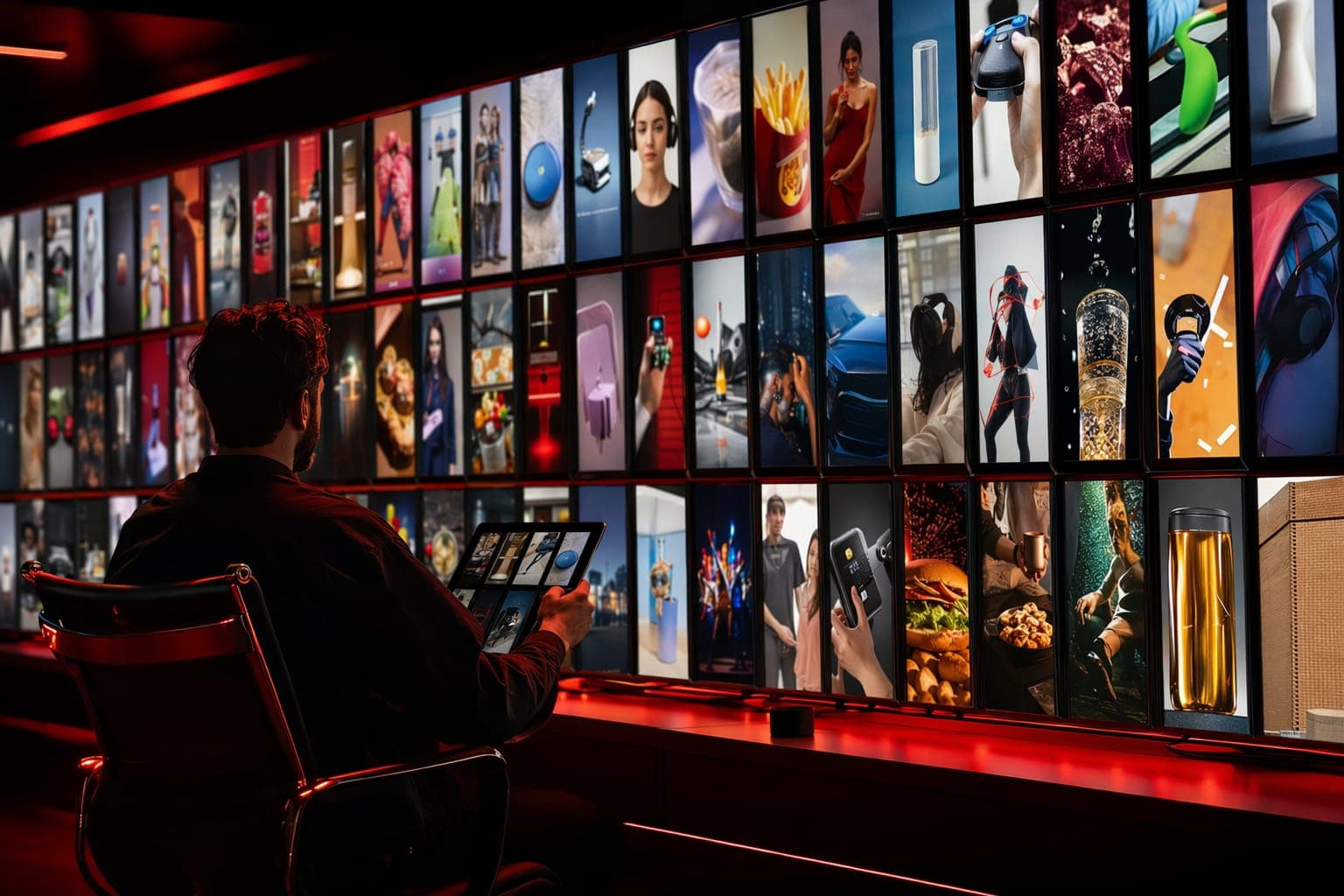
Pinterest sits in an unusual position for Indian D2C brands. It looks like a social platform, but users often behave more like planners, researchers, and visual searchers. They browse ideas, compare aesthetics, save products, and return when purchase intent matures. That makes Pinterest potentially valuable for categories where discovery, aspiration, education, or visual differentiation influences the sale. It also means the usual social-media playbook of posting frequently and chasing engagement is not enough.
A capable Pinterest marketing agency in India should therefore operate more like a search, content, merchandising, and creative production partner than a generic social-media vendor. The commercial question is not whether an agency can publish attractive pins. It is whether the team can translate your catalogue and customer intent into searchable creative assets, connect those assets to useful landing pages, and build a repeatable system without consuming your internal team’s entire week.
When Pinterest Makes Commercial Sense for an India D2C Brand
Start with customer behaviour rather than platform enthusiasm. Pinterest is most relevant when buyers actively collect references, compare styles, plan purchases, or search for solutions that can be communicated visually. Home, beauty, food, fashion, gifting, travel accessories, stationery, and design-led consumer products can naturally generate this behaviour. A visually appealing catalogue helps, but the deeper requirement is having multiple searchable use cases, problems, occasions, combinations, or inspirations around which useful content can be built.
The platform is less convincing when the agency cannot identify why someone would save, revisit, or click your content. A product image placed on a branded background is not automatically a Pinterest strategy. The agency should map each product to customer language, visual themes, purchase occasions, objections, and adjacent interests. This map becomes the basis for boards, pin concepts, descriptions, destination pages, and creative variants. Without it, publishing becomes a design task disconnected from how discovery actually happens.
Pinterest should also be evaluated against your current acquisition mix. It does not need to replace Meta, Google, marketplaces, creators, or retention channels. Its role may be to introduce the brand during consideration, capture visual search demand, support remarketing pools, or create discoverable assets that continue circulating beyond the initial publishing window. Founders should ask what specific job Pinterest will perform inside the wider growth system instead of approving it as another isolated channel.
A serious agency will be willing to say when Pinterest is not yet the priority. If your catalogue lacks strong imagery, your product pages fail to explain the offer, or inventory changes too quickly for structured publishing, those foundations may need attention first. The right commercial diagnosis can include a staged entry rather than an immediate retainer. That operator discipline matters more than a presentation filled with mood boards, trend screenshots, and vague assurances about organic visibility.
What a Pinterest Marketing Agency Should Actually Own
Ownership should begin with intent architecture. The agency needs to research how prospective customers describe desired outcomes, styles, ingredients, occasions, problems, and product types. Those themes should then be organised into a practical publishing structure. This includes board logic, naming conventions, keyword placement, pin formats, content destinations, and links between broad discovery topics and commercial catalogue pages. The output should resemble a navigable demand map, not a random calendar of attractive images.
Creative production is the next major responsibility. Pinterest requires enough variation to test different hooks, layouts, product contexts, headlines, and calls to action without making the brand feel inconsistent. That is an operating problem, not simply a design problem. WTF Amplify’s Content Engine produces 100 reels per week at $0.30 per clip versus an industry range of $80–200. The larger lesson is that creative volume becomes viable only when templates, inputs, approvals, and repurposing are engineered as a system.
The agency should also own destination quality. Every pin needs somewhere useful to send the visitor, whether that is a collection, product page, guide, comparison, recipe, editorial page, or campaign landing page. The visual promise and the destination must match. Sending an inspiration-led pin to an unrelated homepage creates friction and makes channel evaluation unreliable. Strong teams flag landing-page gaps early and coordinate the required copy, merchandising, product selection, and tracking before scaling publishing or media.
Reporting must connect platform activity to commercial movement without pretending that every interaction is an immediate sale. Ask the agency to separate discoverability, qualified site visits, assisted journeys, and direct conversions. It should explain how attribution limitations affect interpretation and what evidence will determine whether the channel deserves more resources. Avoid vendors that hide behind impressions or saves alone. Those signals can inform creative decisions, but they do not replace a business case tied to customer acquisition and revenue quality.
Build a Pinterest Content System, Not a Posting Calendar
A scalable system begins with source assets. Product photography, founder explanations, customer questions, creator footage, packaging details, ingredient stories, comparisons, use cases, and existing short-form videos can all become inputs. The agency’s job is to turn this library into structured creative families rather than requesting a fresh shoot for every post. One source asset should support multiple discovery angles while preserving accurate claims, brand guidelines, and a clear relationship between the pin and the destination page.
The content plan should balance product-led and problem-led discovery. Product-led pins help customers understand what is sold, while problem-led content enters the journey through needs, ideas, routines, occasions, or aesthetic preferences. An agency that only publishes catalogue images leaves much of the discovery surface unused. An agency that only publishes inspiration can generate attention without purchase relevance. The operating goal is a connected path from a useful visual idea to a suitable product, proof point, and next action.
Creative templates should accelerate output without making every asset identical. The agency can define repeatable structures for comparisons, collections, explainers, demonstrations, occasion edits, customer questions, and visual guides. Within those structures, it should vary the opening promise, image treatment, text hierarchy, product emphasis, and destination. This provides enough consistency for production while creating meaningful differences for learning. A template is useful only when it reduces production friction and protects brand quality at the same time.
Approvals are often where Pinterest programmes stall. Founders should agree on claim boundaries, typography, approved imagery, product priorities, seasonal context, and landing-page rules before production expands. The agency should maintain a clear queue for source assets, drafts, revisions, approval, publishing, and learnings. When responsibilities remain informal, feedback arrives late and output becomes erratic. A good content engine protects founder attention by converting recurring decisions into documented rules instead of reopening the same discussion for every creative asset.
Paid Distribution, Tracking, and Commercial Evaluation
Paid Pinterest activity should amplify a coherent content and destination system, not compensate for weak creative. Begin by defining the audience context and commercial action each campaign supports. Discovery creative may need a different message and destination from product-focused retargeting. The agency should explain how it will separate those roles, manage creative fatigue, and feed learning back into organic publishing. Media buying without a content feedback loop usually creates more spend reports than reusable customer insight.
Tracking should be agreed before launch. The agency needs to document campaign naming, destination URLs, conversion events, catalogue setup where relevant, and how Pinterest traffic appears inside your analytics stack. It should also check whether mobile pages load correctly, product availability is dependable, and checkout behaviour can be observed. Founders do not need a complicated dashboard for its own sake. They need a consistent view that makes creative, audience, landing-page, and commercial decisions easier to defend.
Evaluate the programme using a decision framework rather than a single blended result. Determine which creative themes attract qualified visits, which destinations hold attention, which product groups generate meaningful actions, and whether assisted journeys appear elsewhere in the stack. The agency should distinguish a tracking problem from a content problem and a content problem from an offer problem. That diagnostic ability is the real value of a specialist partner; otherwise, every weak outcome is explained away as a need for more time.
Scaling should follow repeatable evidence. When a theme works, the next move is not merely to increase media. Expand the useful concept across additional products, formats, customer intents, and landing pages while retaining the original insight. When a theme fails, identify whether the promise, visual, targeting, destination, or product fit caused the breakdown. This operating rhythm turns Pinterest into a learning system. It also prevents the common pattern of publishing disconnected assets, boosting a few, and declaring the platform ineffective.
How to Select a Pinterest Marketing Agency in India
The agency selection process should expose operating depth. Ask candidates to audit your catalogue and explain which customer intents they would pursue, which assets are missing, and where each pin would send traffic. Their answer should contain commercial choices rather than generic advice about consistency and aesthetics. A credible team can prioritise products, define content families, identify landing-page requirements, and state what it would not publish. That clarity is a stronger buying signal than a long list of platform services.
Review how production is handled. Some agencies outsource each asset individually, which can create delays, uneven quality, and rising costs as volume increases. Others rely on a narrow template set that quickly becomes repetitive. Ask who writes briefs, adapts source material, checks product accuracy, handles revisions, and records creative learning. You are buying a production and decision system. If the agency cannot describe that workflow clearly, the founder or internal marketing team will eventually become its unpaid project manager.
Commercial terms should reflect defined ownership. The proposal should state whether the agency covers strategy, design, video adaptation, publishing, paid distribution, landing-page recommendations, tracking, and reporting. It should also identify dependencies on your team, such as product data, source assets, inventory updates, legal approvals, and website changes. Ambiguous scopes produce predictable conflict. A cheaper retainer can become expensive when every useful deliverable is treated as an add-on or requires repeated coordination from senior internal operators.
Finally, select for candour and learning speed. Pinterest may become a meaningful discovery channel, a supporting content layer, or a low-priority experiment depending on the brand. The agency should be comfortable reaching any of those conclusions from evidence. At WTF Amplify, we think in connected engines: production creates the creative supply, social distribution creates learning, and the wider growth stack captures demand. The best Pinterest partner should display the same systems mindset rather than selling isolated posts as a complete growth strategy.
Questions we get asked
What does a Pinterest marketing agency in India do for D2C brands?
A specialist agency researches customer search and discovery intent, structures boards and content themes, produces pin variations, connects assets to relevant landing pages, manages publishing or paid distribution, and reports commercial learning. The strongest agencies also coordinate catalogue data, tracking, creative repurposing, and website requirements instead of limiting the engagement to graphic design and scheduling.
How should a D2C brand measure Pinterest marketing?
Measure Pinterest across discoverability, qualified site traffic, on-site behaviour, assisted customer journeys, and direct commercial actions. Review performance by creative theme, product group, destination, and audience context. Saves and impressions can guide content decisions, but they should not be treated as the final business outcome. Tracking limitations and the platform’s planning behaviour should be acknowledged explicitly.
Should an Indian D2C brand use organic Pinterest or paid ads?
The answer depends on the catalogue, creative supply, search intent, and available proof. Organic publishing can establish discoverable content and reveal useful themes, while paid distribution can accelerate testing and amplify proven ideas. They work best as connected layers. Buying media before fixing creative, destinations, and tracking usually makes diagnosis harder rather than producing a dependable acquisition system.
Systems behind this playbook
Talk to WTF Amplify if you want Pinterest run as a measurable D2C content and discovery system, not another posting calendar.
Book a demo