Ecommerce Copywriting
How to Choose an Ecommerce Copywriting Agency in India
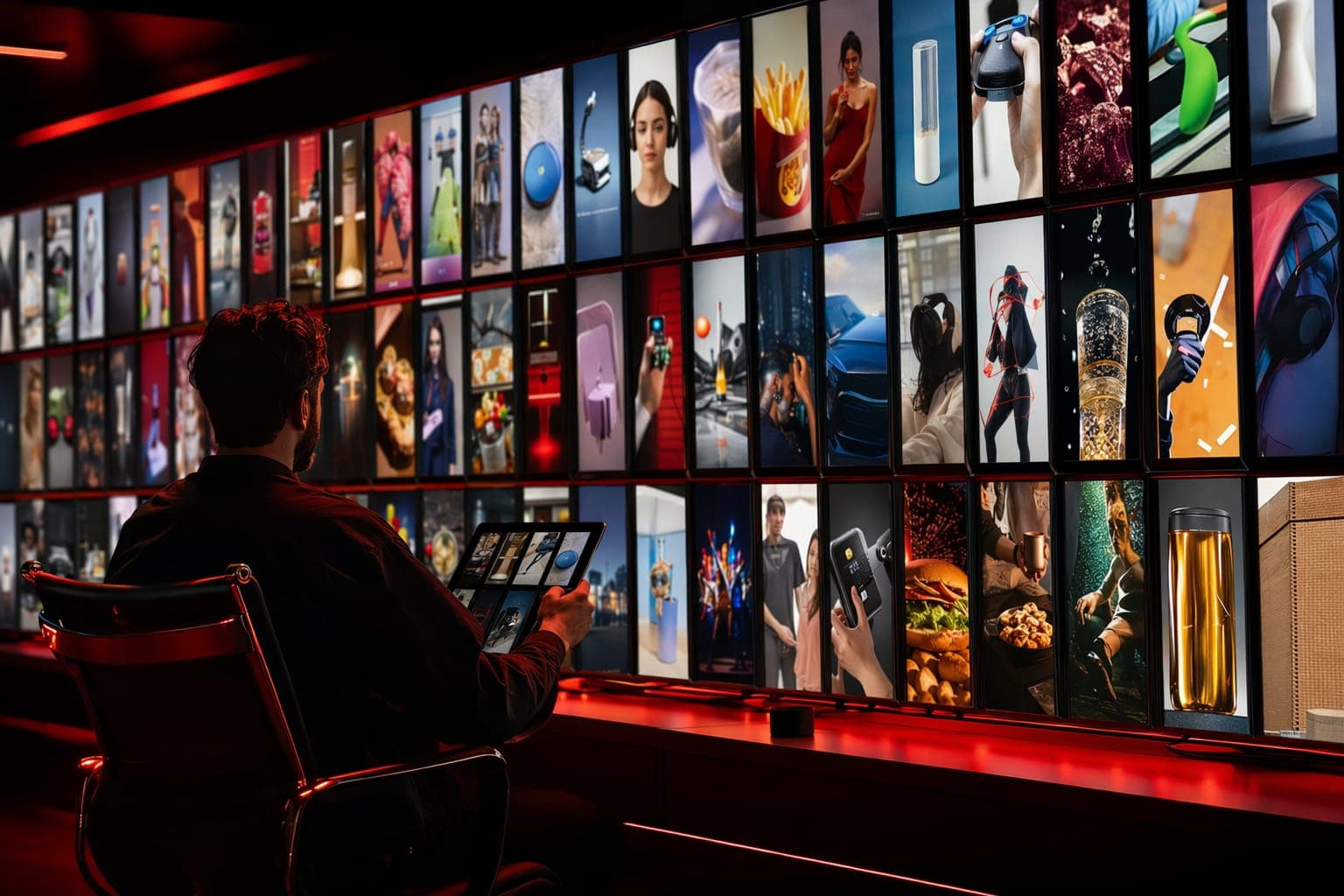
Most Indian D2C brands do not have a copy shortage. They have a message consistency problem. Ads promise one outcome, product pages explain another, marketplace listings become feature dumps, and post-purchase messages sound like they came from a different company. An ecommerce copywriting agency should solve this operating problem across the customer journey, not merely supply clever headlines or rewrite a homepage once.
As founders, we would evaluate an agency by how quickly it can understand the product, convert customer language into usable claims, and build a repeatable production system. The commercial objective is not prettier prose. It is clearer buying decisions, faster creative testing, fewer unanswered objections, and a recognisable voice across your store, marketplaces, social content, WhatsApp journeys, packaging, and support communication.
What an Ecommerce Copywriting Agency Should Actually Own
A useful ecommerce copywriting agency in India should begin with message architecture. This means defining the customer, purchase trigger, core promise, supporting proof, major objections, use cases, and boundaries around claims. Without that foundation, every deliverable becomes an isolated writing exercise. Your homepage may sound premium while your ads compete on discounts and your product pages speak in technical language that first-time buyers do not understand.
The scope should cover high-intent surfaces before low-intent brand polish. Product detail pages, collection pages, offer pages, advertorials, marketplace listings, ad scripts, comparison pages, FAQs, and cart communication usually influence buying decisions directly. The agency should map each surface to a customer question. Copy for someone discovering the category cannot be identical to copy for someone comparing variants or checking delivery and payment conditions.
Ownership also includes maintaining a living message library. Winning hooks, approved claims, objection responses, proof points, product terminology, regional-language adaptations, and phrases that support should avoid must be documented. This gives internal teams and external partners a shared source of truth. It also prevents the familiar D2C problem where every campaign restarts from a blank document and requires the founder to rewrite everything before launch.
Audit the Customer Journey Before Rewriting Pages
We would not start by asking an agency for ten homepage options. We would ask it to audit the journey from first impression to repeat purchase. That audit should compare ad promises with landing-page explanations, product-page claims with customer questions, and checkout messaging with actual fulfilment policies. It should also inspect marketplace listings, WhatsApp templates, support replies, packaging inserts, and review themes for contradictions or missing information.
The strongest source material is often already inside the business. Support conversations reveal confusion in the customer’s own words. Reviews expose the benefits buyers value after using the product. Sales calls show which explanations build confidence. Returns and cancellation reasons reveal expectations the copy failed to set. An agency should synthesise these inputs rather than relying on generic category language or copying the vocabulary used by larger competitors.
The audit should produce a prioritised action plan, not a long presentation with vague observations. Each recommendation needs a business reason, an affected journey stage, and a clear implementation owner. A confusing variant selector may deserve attention before a brand manifesto. An unanswered usage question may matter more than another lifestyle headline. Good ecommerce copywriting is practical sequencing: remove the most expensive uncertainty first, then improve persuasion.
Build Product Pages Around Decisions, Not Word Count
A product page has to help a customer make a decision without access to a store associate. The agency should identify what the buyer must understand, believe, compare, and accept before placing an order. That normally includes the primary benefit, ideal use case, differentiation, proof, method of use, relevant ingredients or materials, variant guidance, delivery expectations, payment information, and answers to objections specific to the category.
Page structure matters as much as individual sentences. Mobile shoppers scan, return to sections, open accordions, inspect images, and look for proof near the claim that created doubt. Copy should therefore be modular. A concise top section can establish relevance, while deeper sections explain mechanism, comparison, usage, and policies. The agency must work with design rather than handing over a large document and expecting the brand team to make it usable.
Claims require particular care in India’s D2C market. An agency should distinguish between a customer benefit, an opinion, a product attribute, and a claim requiring substantiation. It should never manufacture authority or convert anecdotal feedback into certainty. Ask how its writers verify claims with founders, product teams, compliance advisers, or existing documentation. Copy that produces short-term urgency but creates misleading expectations eventually becomes a support, reputation, and retention problem.
Connect Copywriting With Creative and Content Production
Copy cannot remain trapped on the website. The same message architecture should feed hooks, scripts, creator briefs, captions, statics, landing pages, and remarketing sequences. When every format uses a different promise, the brand cannot learn which message actually works. A copywriting partner should turn one customer insight into several testable angles while preserving the underlying truth and maintaining continuity after the click.
This is where production capacity becomes commercially relevant. WTF Amplify’s Content Engine can produce 100 reels per week at $0.30 per clip, compared with an industry range of $80-200. That capacity is useful only when the message inputs are disciplined. Cheap production without a testing framework creates more noise. A clear copy system lets the team vary hooks, objections, demonstrations, proof, and calls to action without drifting away from the product’s positioning.
We would require a structured feedback loop between copy and performance teams. The agency should record which angles are being tested, where they appear, what audience context they address, and what happens after the click. It should then use the learning to update product pages and future briefs. The objective is not to declare a permanent winning headline. It is to create an institutional memory that improves each production cycle.
Evaluate Agency Process, Team, and Commercial Fit
Before hiring an ecommerce copywriting agency in India, ask who performs the research, who writes, who edits, and who handles revisions. A strong portfolio does not tell you whether your account will be run by the people whose work you reviewed. Request a walkthrough of one anonymised project from raw research to final deployment. You are looking for evidence of reasoning, category understanding, and operational discipline rather than polished before-and-after screenshots.
The engagement model should match the bottleneck. A defined project can work for a message foundation, store rewrite, or launch. An ongoing arrangement is more appropriate when the brand needs continuous ad scripts, campaign pages, marketplace updates, lifecycle messages, and new product support. Avoid retainers that promise an arbitrary volume of words. Ecommerce output should be organised around journeys, campaigns, products, and experiments instead of raw word count.
Commercial terms should clarify research access, deliverables, revision boundaries, design coordination, implementation support, claim approval, turnaround expectations, and ownership of final assets. Also establish who approves work on the brand side. If every line waits for the founder while several internal teams provide conflicting comments, no agency process will remain efficient. A single accountable reviewer and a documented voice guide usually produce faster, more consistent decisions.
Run Copywriting as an Ongoing Growth System
The first operating cycle should focus on one commercially meaningful journey. Choose a product, campaign, or category where customer intent exists but the message is fragmented. Gather the evidence, define the message hierarchy, rewrite the relevant assets, deploy them together, and observe customer behaviour. Changing every page simultaneously makes diagnosis difficult and encourages teams to attribute outcomes to whichever change they personally preferred.
Measurement should connect copy to the job of each surface. An ad hook is responsible for earning qualified attention. A landing page must preserve message continuity and resolve uncertainty. A product page should support confident selection. WhatsApp communication should move the conversation forward without sounding robotic or evasive. Support copy should produce clear resolution. Evaluating every asset by the same top-level commercial number hides where the journey is breaking.
The long-term asset is not a folder of approved sentences. It is an operating system that converts customer evidence into messages, messages into assets, assets into tests, and test learning back into the message library. That system reduces founder dependency and makes new launches easier to coordinate. The right agency helps install it, trains the relevant teams, and continues improving it instead of making the brand permanently dependent on external writers.
Questions we get asked
What does an ecommerce copywriting agency in India provide?
A capable agency can provide customer and competitor research, message architecture, product-page copy, collection and landing pages, marketplace listings, ad scripts, campaign messaging, FAQs, WhatsApp templates, packaging copy, and voice guidelines. The exact scope should follow the customer journey and the brand’s commercial bottleneck rather than a generic bundle of pages.
How should a D2C brand compare ecommerce copywriting agencies?
Compare their research process, ability to use customer evidence, category understanding, claim discipline, mobile-first page thinking, collaboration with design and performance teams, revision process, and implementation support. Ask to see how a project moved from raw inputs to deployed assets instead of judging the agency only by portfolio headlines.
Should copywriting be a project or an ongoing engagement?
Use a project when you need a defined message foundation, launch system, or store rewrite. Consider an ongoing engagement when copy must support frequent campaigns, creative testing, new products, marketplace updates, and lifecycle communication. In either case, require documented learning so useful customer insights remain with the brand.
Systems behind this playbook
Talk to WTF Amplify about turning customer insights into a repeatable D2C messaging and content production system.
Book a demo