Youtube Shorts
YouTube Shorts Marketing Agency India: A D2C Operator Playbook
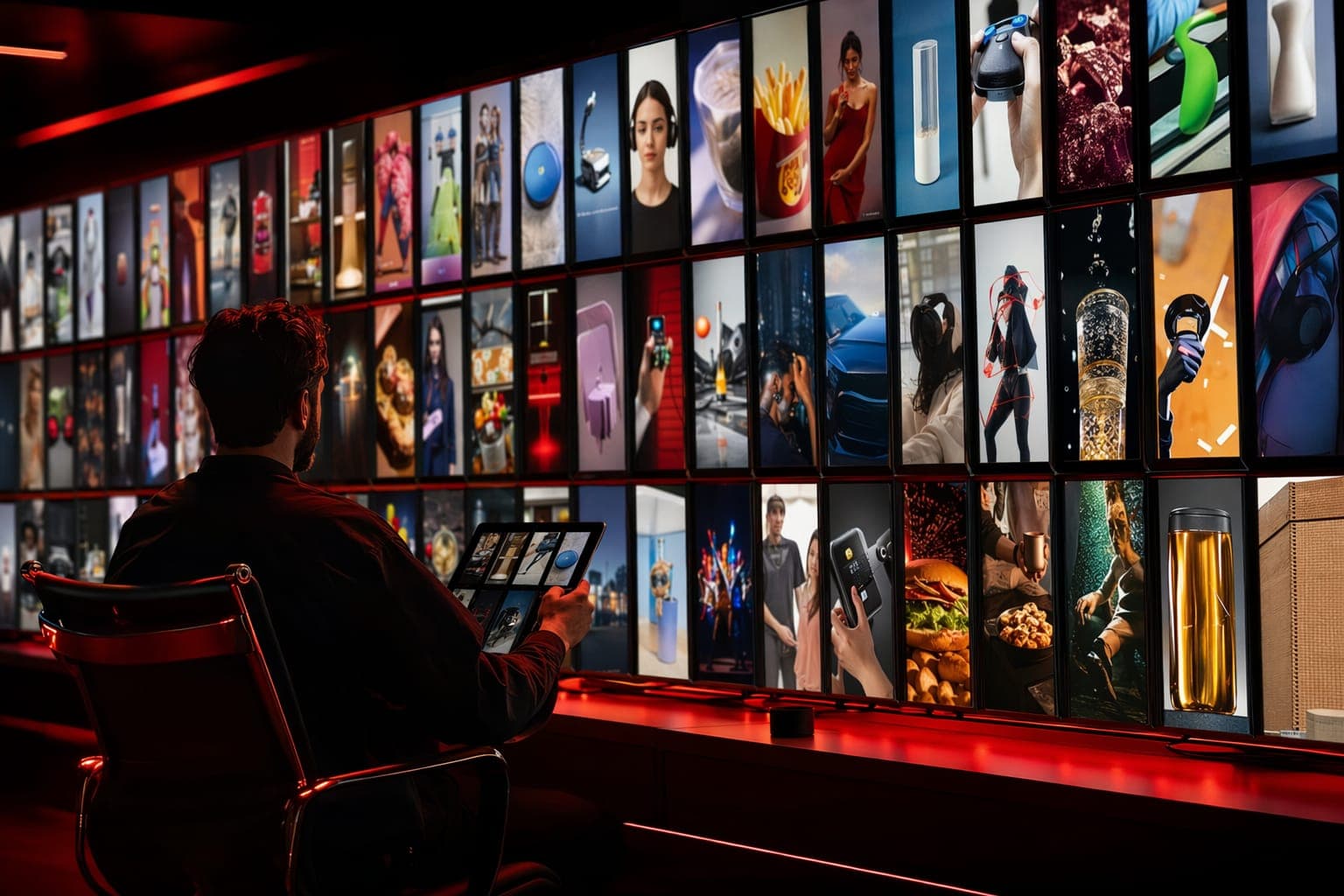
Most India D2C brands approach YouTube Shorts as an extension of Instagram: resize a reel, change the caption, upload, and hope distribution follows. That is not a channel strategy. Shorts sits inside a search-led, recommendation-led platform where viewers can discover a brand through product questions, comparisons, demonstrations, creator narratives, and category education. A capable YouTube Shorts marketing agency in India should therefore build a repeatable discovery and conversion system, not merely maintain another posting calendar.
The commercial question is not whether short-form video matters. It is whether your operating model can produce enough useful creative, learn from viewer behaviour, and connect attention to product pages, marketplaces, WhatsApp, or branded search. As founders, we should evaluate agencies on production economics, creative learning, distribution discipline, and attribution quality. This playbook explains what to buy, what to keep in-house, how to structure the workflow, and where WTF Amplify's Content Engine fits.
What a YouTube Shorts Marketing Agency Should Actually Own
The agency's first responsibility is converting commercial priorities into a channel-specific content map. That means understanding the products that need demand, the objections blocking purchase, the searches surrounding the category, and the narratives that can earn attention without resembling a conventional advertisement. The output should connect product education, demonstrations, founder perspectives, customer situations, comparisons, and cultural hooks. If an agency starts with trending audio before understanding margins, inventory, positioning, and customer questions, it is optimising activity rather than business value.
Creative production is only one part of the mandate. A proper partner should own research, scripting, footage planning, editing logic, packaging, publishing hygiene, comment intelligence, and performance interpretation. Titles, opening frames, on-screen language, descriptions, and channel organisation should reinforce the same customer intent. For India D2C brands, the agency must also understand how English, Hinglish, and regional-language cues affect comprehension. Translation alone is insufficient because references, purchase anxieties, and product vocabulary vary across audiences and markets.
The agency should create a clear bridge between Shorts and the rest of the customer journey. Some viewers may move directly to a product page, while others may search the brand, inspect long-form videos, visit a marketplace listing, or begin a WhatsApp conversation. Each route needs intentional creative and tracking. The Shorts team should coordinate with performance, marketplace, customer support, and retention operators so that the promise made inside the video remains consistent when the viewer reaches the next touchpoint.
Founders should also insist on ownership of assets, source files, channel access, scripts, learning logs, and audience insights. Dependency becomes expensive when the brand cannot reuse footage, identify winning concepts, or move production between partners. The healthiest agency relationship builds an internal knowledge base around hooks, objections, formats, products, and audience language. Even if the agency executes the work, the brand should retain the strategic memory created by every published asset and every meaningful viewer response.
How Shorts Strategy Differs From Reposting Instagram Reels
A reel can be visually suitable for YouTube Shorts while still being strategically wrong for the platform. Instagram discovery often benefits from social context, creator familiarity, and rapid trend participation. YouTube can surface content through recommendations, search behaviour, topic adjacency, and viewing history. The creative therefore needs a durable subject, not only an attractive execution. Product explanations, ingredient questions, usage errors, buying comparisons, and problem-led stories can remain relevant after the social trend that inspired the original edit has disappeared.
Packaging deserves independent treatment. A recycled caption may not communicate what a YouTube viewer is about to learn or see. The opening frame, spoken hook, title, on-screen text, and visual proof should align around one clear expectation. When these elements compete, viewers receive mixed signals. An experienced YouTube Shorts marketing agency in India should be able to explain why a concept belongs on the channel, what customer intent it addresses, and how its packaging supports discovery without relying on empty clickbait.
The comment section should operate as a research feed rather than a community task delegated after publishing. Questions reveal uncertainty around price, usage, delivery, ingredients, compatibility, availability, and trust. Objections can become new scripts, while repeated confusion may expose a weak product page or unclear offer. The agency should route operational questions to the appropriate team and convert recurring themes into creative briefs. This turns channel management into customer intelligence instead of a sequence of isolated uploads.
Cross-platform reuse still makes economic sense, but reuse should happen at the footage and concept level rather than through blind duplication. The same product demonstration can support Instagram, Shorts, marketplace media, paid social, and WhatsApp, yet each placement may need a different opening, pace, text treatment, or call to action. Build a shared asset library, then create platform-native versions. This approach preserves production efficiency while respecting the context in which each audience encounters the brand.
Building a Scalable Content Production System
Short-form scale begins with a structured idea inventory. Instead of waiting for inspiration, capture customer objections, search themes, support conversations, product differentiators, creator angles, founder stories, reviews, usage moments, and category myths. Each idea should have a defined audience, commercial purpose, proof source, and likely destination after viewing. This makes briefing faster and prevents the content calendar from becoming a random collection of trends. It also helps founders distinguish genuinely new concepts from cosmetic variations of the same message.
Production should be organised around reusable inputs. A product shoot can capture demonstrations, textures, packaging details, founder explanations, customer scenarios, and clean visual inserts for multiple edits. Scripts should specify the hook, evidence, visual sequence, language, and call to action before footage reaches an editor. When these decisions are postponed, editing becomes an expensive strategy meeting. Clear pre-production gives editors room to improve pacing and clarity without forcing them to guess what the brand is trying to sell.
WTF Amplify's Content Engine is designed for this production bottleneck. It produces 100 reels per week at $0.30 per clip, compared with an industry range of $80-200. The relevant advantage is not cheap output for its own sake. It is the ability to generate enough creative variations to test hooks, narratives, edits, products, and audience contexts without treating every asset as a miniature campaign. Selected outputs can then be adapted and packaged for YouTube Shorts rather than published as undifferentiated cross-posts.
Volume must be controlled by review standards. Every asset should pass checks for factual accuracy, brand language, product representation, visual legibility, platform fit, and commercial relevance. Sensitive claims require source validation before publication. The workflow should also define who can approve evergreen education, who must review offer-led content, and when founders need to intervene. A scalable system removes founders from repetitive approvals while preserving their involvement in positioning, claims, and high-consequence messages.
Choosing the Right Agency Model and Commercial Scope
Agency proposals become difficult to compare because some partners sell editing, some sell channel management, and others bundle creators, strategy, and distribution. Ask every shortlisted agency to separate research, ideation, scripting, production, editing, publishing, community handling, reporting, and rights management. The cheapest proposal may exclude the work that determines whether content performs. Conversely, a large retainer can conceal a low-output workflow. Scope clarity matters more than the label attached to the service.
Review the agency's creative process before reviewing its showreel. A polished portfolio demonstrates taste, but it does not prove that the team can learn your category, build repeatable formats, or maintain brand accuracy. Ask how briefs are created, where claims are sourced, how footage is stored, how underperforming concepts are diagnosed, and how customer comments influence future scripts. Strong operators can describe the path from commercial question to published asset without hiding behind a vague promise of virality.
Commercial alignment should cover asset ownership and usage rights. Confirm whether the brand can reuse edits in paid media, marketplaces, product pages, WhatsApp, retail screens, and other owned channels. Clarify whether creator appearances, music, stock footage, and voiceovers carry restrictions. Rights problems usually surface when a successful organic asset is ready for broader use. The contract should make reuse simple, document any limitations, and ensure that source files remain accessible to the brand.
The right operating model may be hybrid. Your internal team can own positioning, claims, product priorities, and final escalation while an external partner handles research support, scripting, production, editing, packaging, and publishing. This structure works when responsibilities are explicit and feedback is consolidated. It fails when every stakeholder rewrites scripts independently or when the agency receives commercial context only after production. Assign a brand-side owner who can resolve conflicts and protect the speed of the content system.
Measurement, Attribution, and Creative Learning
Do not evaluate Shorts through views alone. Attention is useful only when it teaches the brand something or creates a path toward demand. Your reporting should connect content themes with viewer retention patterns, comments, channel exploration, branded search signals, product-page visits, marketplace movement, WhatsApp conversations, and assisted conversions where tracking permits. Attribution will remain imperfect because viewers often change devices or purchase later. The solution is disciplined triangulation, not pretending that every sale has a perfectly visible source.
Creative reporting should answer operational questions. Which hooks attract the intended customer? Which demonstrations reduce uncertainty? Which products generate meaningful questions? Which language makes the proposition easier to understand? Which formats create curiosity but fail to produce commercial action? Group results by concept, audience problem, product, and execution pattern rather than judging every video as a standalone event. Patterns become visible when the reporting structure reflects how ideas were designed and why they were published.
Separate creative failure from distribution failure and journey failure. A video may hold attention but direct viewers to an irrelevant landing page. Another may communicate the product clearly but reach an audience with weak purchase intent. A strong agency should diagnose the full path before recommending more production. That diagnosis may lead to a revised hook, a clearer product page, a marketplace update, a WhatsApp flow, or a different offer. Content cannot compensate indefinitely for a broken post-view experience.
Maintain a living learning log that records the hypothesis, creative choices, audience response, operational outcome, and next action for each meaningful test. The purpose is not administrative completeness. It is to stop teams from repeating failed ideas, losing winning formats, or attributing success to superficial details. Over time, the log becomes a category-specific creative advantage. New editors, agencies, and internal hires can understand what the brand has learned without restarting experimentation from the beginning.
Connecting Shorts to the Wider D2C Growth System
Shorts should not operate as a content island. High-intent questions can be routed into product pages, marketplace listings, support material, founder content, and WhatsApp journeys. Strong demonstrations can become paid creative, while recurring objections can inform sales scripts and packaging copy. The content team should regularly exchange insights with customer support and performance operators. This coordination increases the value of each production cycle because one customer insight can improve several acquisition and conversion surfaces.
WhatsApp is particularly relevant in India when a product requires explanation, availability confirmation, order support, or guided selection. WTF Amplify's WhatsApp Engine delivers 33-second average replies and 80% support automation. Shorts can introduce the use case and invite an appropriate conversation, while the WhatsApp layer handles repetitive questions without forcing the content itself to carry every detail. The handoff should be transparent, permission-aware, and consistent with the promise made in the video.
Owned distribution can extend selected creative beyond platform algorithms. WTF Amplify's media network includes 300+ screens, 3 Cr+ monthly impressions, 1 Lakh+ samples per month, and 1.5 Lakh+ app users. Not every Short belongs in these environments, but suitable product demonstrations, launch narratives, and sampling prompts can be adapted for broader exposure. The operative word is adapted: screen context, viewing distance, audio availability, and customer intent differ from a personal YouTube feed.
The founder's final decision should be based on system fit. Choose a YouTube Shorts marketing agency in India that can connect content economics, platform-native packaging, customer intelligence, and conversion pathways. Avoid partners selling isolated virality or production without learning. Start with clear products, audiences, claims, and destinations, then build a repeatable workflow around them. The objective is not to occupy another channel. It is to create a compounding library of discoverable creative that supports the wider D2C growth engine.
Questions we get asked
What should a YouTube Shorts marketing agency in India include?
The scope should clearly cover research, strategy, scripting, production, editing, channel packaging, publishing, comment intelligence, reporting, and asset rights. It should also define how Shorts connect to product pages, marketplaces, paid media, branded search, and WhatsApp rather than treating views as the only outcome.
Can an India D2C brand reuse Instagram Reels on YouTube Shorts?
Yes, but reuse the underlying footage and concept rather than automatically duplicating the final post. Adapt the opening frame, title, on-screen text, pacing, and call to action for YouTube's discovery context. Platform-native packaging preserves production efficiency without sacrificing relevance.
How should founders evaluate YouTube Shorts agency performance?
Evaluate creative learning and commercial contribution alongside platform engagement. Review which themes attract relevant viewers, answer purchase questions, create branded interest, support product discovery, and move customers toward product pages, marketplaces, or WhatsApp. Require an accessible learning log rather than a dashboard containing only surface-level activity.
Systems behind this playbook
Talk founder-to-founder with WTF Amplify about building a scalable YouTube Shorts production and conversion system for your D2C brand.
Book a demo